
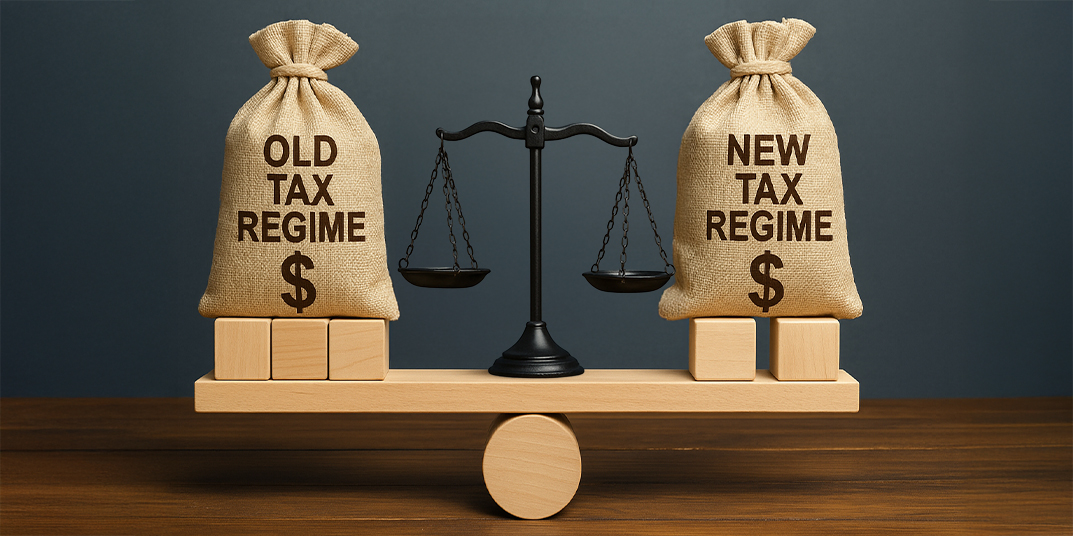
With tax season approaching, many taxpayers are left wondering: Which tax regime is better — old or new? Don't worry — we're here to break it down for you.
Understanding the Two Regimes
- • The new tax regime was introduced by the Government to promote consumer spending over traditional saving. The idea is to bring more money into the economy rather than locking it away in long-term, illiquid investments like PPF, LIC policies, NSC, and similar instruments.
- • The old tax regime continues to reward those who prioritize saving and investing, offering a wide range of deductions and exemptions under sections like 80C, 80D, HRA, LTA, and more.
Which Regime is Better for AY 2025–26?
- • If you actively invest in tax-saving instruments and claim multiple deductions, the old regime may offer you more tax savings.
- • If you prefer a simpler tax structure with lower rates and fewer deductions, the new regime could be the better fit.
- • Most salaried taxpayers can choose the regime that works best each year when filing. Business owners must be cautious—once switched, it’s harder to revert.
Our Recommendation for AY 2026–27
- • The Government has announced further tax relief under the new regime.
- • If your annual income exceeds ₹12.75 lakhs, the new regime may result in lower tax liability due to reduced slab rates.
Final Thoughts
- • There’s no one-size-fits-all answer.
- • Evaluate your income, deductions, and long-term financial goals.
- • If you’re unsure, consult a tax professional for a personalized assessment.
- • Still confused? Reach out to us — we’re here to help you file smarter, not harder.